
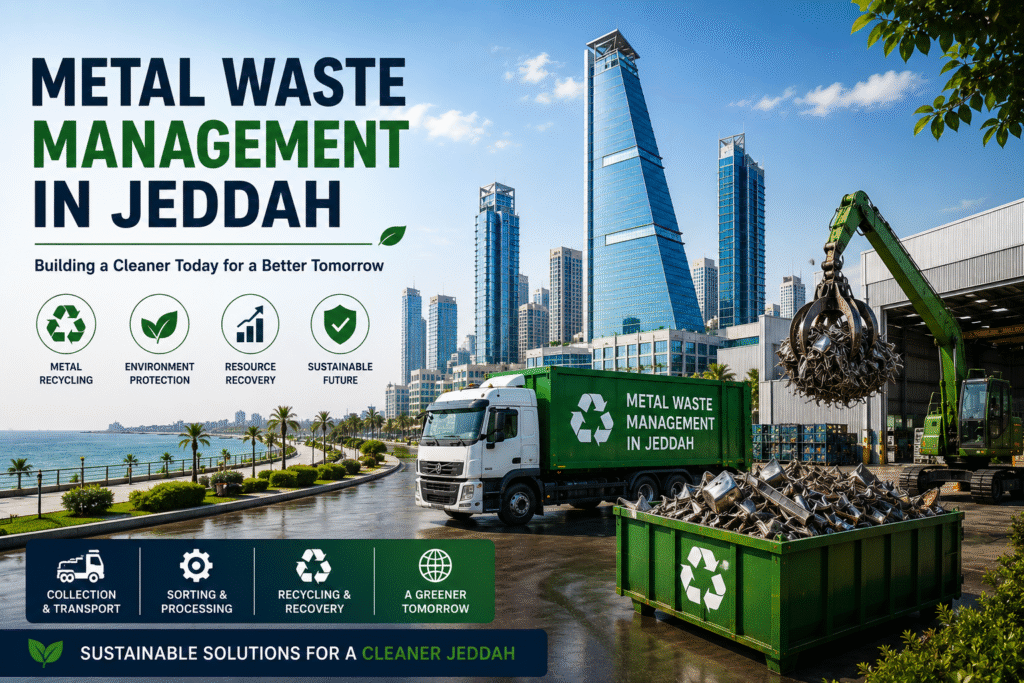
Metal waste has become one of the most pressing environmental and industrial concerns in modern cities.
As industries, construction projects, manufacturing units, and commercial buildings continue to grow, the need for efficient metal waste management in Jeddah is increasing quickly. Managing and recycling metal waste not only helps protect the environment but also makes a positive impact on the economy and resource conservation.
In this detailed guide, we will cover all the essential aspects of Metal Waste Management in Jeddah, including its importance, advantages, recycling process, possible challenges, and best practices for businesses and industries.
What is Metal Waste Management in Jeddah?
Metal Waste Management in Jeddah involves the collection, sorting, transporting, processing, recycling, and disposal of metal waste from various industries, construction sites, factories, warehouses, and other commercial facilities. Common types of metal waste include: – Steel scrap – Aluminum scrap – Copper scrap – Iron waste – Stainless steel waste – Brass materials – Industrial metal residues – Construction metal debris The main objective of Metal Waste Management in Jeddah is to recover valuable materials, reduce landfill waste, and prevent environmental harm.Why is Metal Waste Management in Jeddah Important?
As Jeddah experiences rapid industrial growth and urban expansion, significant quantities of metal waste are produced every day. Without proper management, these materials can cause environmental and operational issues. Key Reasons: 1. Environmental Protection – Recycling metals reduces the need for mining and lowers carbon emissions. 2. Resource Conservation – Metals can be recycled repeatedly without losing their quality. 3. Cost Savings – Businesses can recover value from scrap instead of incurring high disposal costs. 4. Regulatory Compliance – Proper management helps companies meet environmental regulations. 5. Sustainable Development – Metal recycling supports sustainability efforts and circular economy goals in Saudi Arabia.Types of Metal Waste Managed in Jeddah
Ferrous Metals – These contain iron and are magnetic. Examples include steel, cast iron, structural metal waste, and industrial machinery scrap. Non–Ferrous Metals – These do not have iron and often have higher recycling value. Examples include aluminum, copper, brass, zinc, lead, and nickel. Efficient Metal Waste Management services in Jeddah handle both types of metal effectively.The Metal Waste Management Process in Jeddah
Collection – Metal waste is gathered from locations such as construction sites, manufacturing facilities, warehouses, commercial buildings, and industrial plants. Sorting and Segregation – Materials are separated based on type, grade, and level of contamination. Processing – The collected metal is subjected to cutting, crushing, shredding, and compacting. Recycling – Processed metal is sent to recycling facilities where it is melted and transformed into new materials. Distribution – Recycled metals are then supplied back to manufacturers for reuse. This organized process makes Metal Waste Management in Jeddah both efficient and environmentally responsible. —7 Powerful Benefits of Metal Waste Management in Jeddah
1. Reduces Environmental Pollution – Proper recycling minimizes soil, water, and air pollution. 2. Conserves Natural Resources – Recycling reduces mining and helps preserve natural resources. 3. Supports Circular Economy – Metal recycling keeps resources in use instead of ending up in landfills. 4. Creates Economic Value – Scrap metal can generate extra income for businesses. 5. Lowers Energy Consumption – Producing metals from recycled materials uses much less energy. 6. Improves Workplace Safety – Organized waste handling reduces workplace hazards. 7. Enhances Corporate Sustainability – Responsible waste management improves a company‘s environmental image. —Industries That Benefit from Metal Waste Management in Jeddah
Construction Industry – Construction projects produce large amounts of steel bars, structural components, and reinforcement materials. Manufacturing Industry – Factories generate production scrap, metal shavings, and defective products. Automotive Sector – Vehicle repairs and dismantling operations create significant metal waste. Oil and Gas Industry – Equipment replacement and maintenance involve recyclable metal components. Logistics and Warehousing – Storage areas often accumulate obsolete equipment and structures. —Challenges in Metal Waste Management in Jeddah
Despite progress, some challenges remain: – Improper Segregation – Mixing waste decreases recycling effectiveness. – Transportation Costs – Moving heavy metal waste demands specialized logistics. – Contamination Issues – Oil, paint, and chemicals can affect metal recyclability. – Lack of Awareness – Some organizations aren’t aware of the financial benefits of recycling. Overcoming these issues leads to better Metal Waste Management in Jeddah. —Best Practices for Effective Metal Waste Management in Jeddah
To enhance recycling efficiency: – Conduct regular waste audits. – Separate ferrous and non–ferrous metals. – Train employees on waste handling protocols. – Partner with certified recycling companies. – Monitor waste generation trends. – Implement sustainability policies. These actions ensure long–term success in Metal Waste Management efforts in Jeddah. —Future of Metal Waste Management in Jeddah
As Saudi Arabia moves toward sustainable development and Vision 2030, the outlook for Metal Waste Management in Jeddah is favorable. Upcoming technologies include: – AI–powered sorting systems – Automated recycling facilities – Smart waste tracking systems – Advanced metal recovery techniques These innovations will help improve recycling rates and operations across different sectors. Learn more ;http://Saudi Vision 2030 – https://www.vision2030.gov.sa — Conclusion Effective Metal Waste Management in Jeddah is crucial for businesses aiming for sustainable growth, regulatory compliance, and environmental responsibility. Through proper collection, sorting, recycling, and disposal, organizations can cut waste, reduce costs, save resources, and support Saudi Arabia’s sustainability goals. By using modern recycling strategies and working with experienced service providers, companies can unlock the full value of their metal waste and contribute to a cleaner, greener future.
Tagged Metal Recycling
