
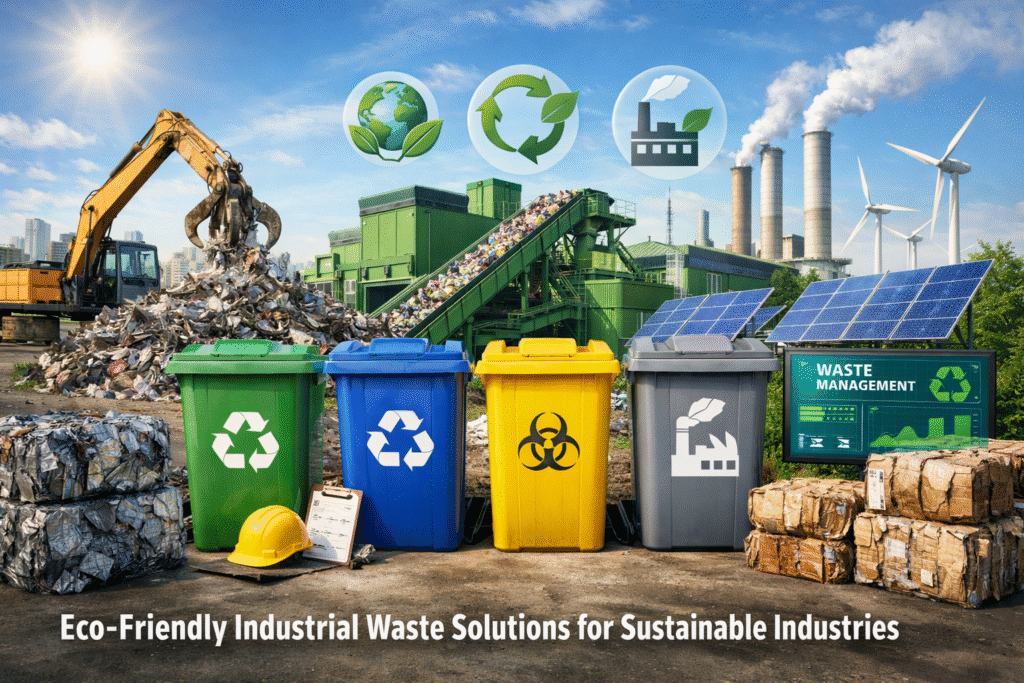
Eco-Friendly Industrial Waste Solutions in 2026
Eco-friendly industrial waste solutions are transforming how industries manage waste while protecting the environment. As industrial activities expand, waste generation increases significantly, making sustainable waste management essential for long-term growth. In 2026, industries must adopt eco-friendly industrial waste solutions to remain compliant, reduce costs, and support global sustainability goals.
Why Eco-Friendly Industrial Waste Solutions Matter in 2026
Eco-friendly industrial waste solutions help industries reduce pollution, conserve resources, and meet environmental regulations. Governments worldwide are enforcing stricter waste disposal laws, while consumers prefer environmentally responsible businesses.
In regions such as Saudi Arabia and the GCC, eco-friendly industrial waste solutions support national sustainability visions, environmental protection goals, and economic diversification initiatives.
Key Challenges in Eco-Friendly Industrial Waste Management
Industries face several challenges when implementing eco-friendly industrial waste solutions:
-
High volume of industrial waste
-
Poor segregation of recyclable and hazardous waste
-
Limited employee awareness of sustainable practices
-
Increasing landfill and disposal costs
Addressing these challenges requires systematic planning and modern waste management strategies.
Best Practices for Eco-Friendly Industrial Waste Solutions
Waste Segregation at Source
Proper waste segregation is the foundation of eco-friendly industrial waste solutions. Separating metal, plastic, paper, organic, and hazardous waste at the source improves recycling efficiency and reduces contamination.
Industrial Recycling Programs
Recycling is a core component of eco-friendly industrial waste solutions. Materials such as scrap metal, cardboard, plastics, and electronic waste can be recycled and reused, reducing landfill dependency and lowering raw material costs.
Certified Eco-Friendly Industrial Waste Management Partners
Partnering with certified waste management companies ensures legal compliance, safe handling of hazardous waste, and environmentally responsible disposal methods.
Waste Reduction at Production Level
Process optimization helps reduce waste generation before it occurs. Lean manufacturing and resource-efficient production methods play a vital role in eco-friendly industrial waste solutions.
Role of Recycling & Circular Economy in Industrial Waste Solutions
The circular economy promotes reuse, recycling, and resource recovery instead of disposal. Eco-friendly industrial waste solutions based on circular economy principles allow industries to convert waste into raw materials, reduce production expenses, and minimize environmental impact. Learn more https://www.unep.org
Smart Technologies Supporting Eco-Friendly Industrial Waste Solutions
Technology is reshaping eco-friendly industrial waste solutions in 2026. Smart tools include:
-
Waste tracking and reporting systems
-
Automated waste sorting technologies
-
Data analytics for waste reduction planning
These technologies improve efficiency, transparency, and regulatory compliance.
Benefits of Eco-Friendly Industrial Waste Solutions for Industries
Industries adopting eco-friendly industrial waste solutions gain multiple benefits:
-
Reduced environmental footprint
-
Lower waste management and disposal costs
-
Improved corporate image and brand trust
-
Compliance with environmental regulations
-
Contribution to sustainability and ESG goals
Conclusion: The Future of Eco-Friendly Industrial Waste Solutions
Eco-friendly industrial waste solutions are essential for sustainable industrial growth in 2026. By implementing waste segregation, recycling programs, smart technologies, and circular economy principles, industries can protect the environment while improving operational efficiency. Investing in eco-friendly industrial waste solutions is not just responsible—it is smart business.
