
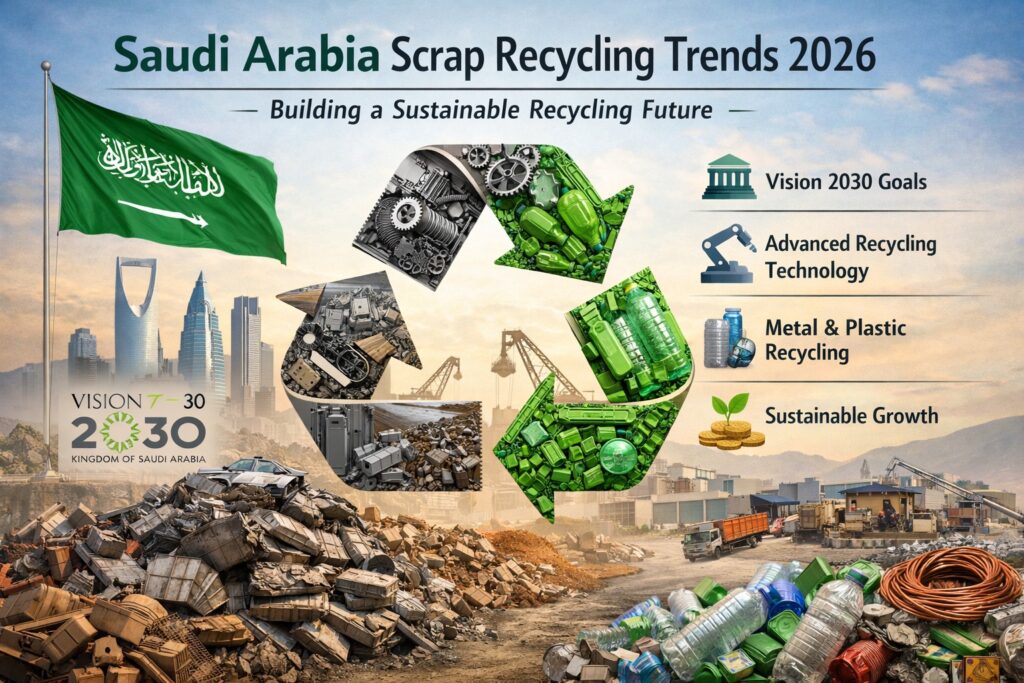
Across the Middle East, the recycling industry is undergoing a meaningful transformation,
and Saudi Arabia Scrap Recycling Trends 2026 clearly reveals that the Kingdom is
playing a leading role in this shift. As Saudi cities continue to expand, mega infrastructure
projects advance, and industrial activity grows at an unprecedented pace, the challenge of
managing industrial and commercial waste has moved to the forefront of national priorities.
Recycling is no longer seen as a background operation; it has become an essential part of
building a sustainable future.
Guided by Vision 2030, scrap recycling in Saudi Arabia has evolved into a strategic industry
that directly supports environmental protection, industrial efficiency, and economic
diversification. What was once considered simple waste handling is now recognized as a
valuable system that recovers resources, reduces energy consumption, and feeds reusable
materials back into the supply chain. This shift reflects a broader commitment to responsible
growth and long-term sustainability.
The Saudi Arabia Scrap Recycling Trends 2026 highlight how modern recycling practices
are reshaping the industry. From advanced metal recycling in Saudi Arabia to innovative
solutions for plastics, electronic waste, and construction debris, recycling companies are
adopting smarter technologies and cleaner processes. These efforts not only reduce landfill
dependence but also support manufacturing, infrastructure development, and job creation.
As a result, Saudi Arabia is steadily positioning itself as a regional leader in modern,
responsible recycling practices – where sustainability, technology, and economic opportunity
come together to shape a cleaner and more resilient industrial future.
Why Scrap Recycling Is Becoming More Important in
Saudi Arabia
Saudi Arabia’s rapid transformation over the past decade has brought remarkable growth in
cities, industries, and infrastructure. Mega construction projects, expanding manufacturing
zones, transportation networks, and energy facilities have all contributed to a sharp rise in
industrial and commercial scrap materials. As a result, scrap recycling in Saudi Arabia has
become a critical solution for managing waste responsibly while preserving valuable natural
resources.
The Saudi Arabia Scrap Recycling Trends 2026 make it clear that recycling is no longer
optional or secondary. Businesses, municipalities, and industrial operators are increasingly
partnering with professional scrap recycling companies in Saudi Arabia to reduce landfill
dependency and recover reusable materials. Recycling now plays a central role in
supporting sustainable development while keeping industrial growth environmentally
balanced.
Key Benefits of Scrap Recycling
Scrap recycling delivers both environmental and economic value:
● Minimizes landfill usage and reduces environmental pollution
● Preserves natural resources such as iron ore, copper, and aluminum
● Reduces energy consumption during metal production
● Supports cleaner, more efficient, and sustainable manufacturing processes
This growing focus on recycling reflects Saudi Arabia’s long-term commitment to
environmental responsibility, operational efficiency, and economic resilience.
Vision 2030: Reshaping the Recycling Industry
Vision 2030 has become the foundation for many of the positive changes shaping the
recycling industry today. Sustainability, resource efficiency, and private-sector growth are
core pillars of this national strategy – all of which directly influence Saudi Arabia Scrap
Recycling Trends 2026.
Government-led initiatives are encouraging:
● Waste reduction at the source
● Higher recycling and material recovery rates
● Investment in modern recycling infrastructure
● Strong partnerships between public and private sectors
By aligning with Vision 2030 recycling goals, scrap recycling companies in Saudi Arabia are
adopting better compliance standards, transparent processes, and environmentally
responsible operations. This alignment has strengthened industry credibility, improved
environmental performance, and attracted both local and international investors seeking
sustainable business opportunities.
Technology Is Redefining Scrap Recycling Trends
2026
One of the most significant Saudi Arabia Scrap Recycling Trends 2026 is the rapid
adoption of advanced technology across recycling facilities. Traditional, labor-intensive
methods are steadily being replaced by intelligent, automated systems designed to improve
efficiency, accuracy, and safety.
Modern recycling facilities now rely on:
● Automated and sensor-based scrap sorting systems
● AI-powered material identification and classification
● High-capacity shredding, magnetic, and separation equipment
These innovations significantly reduce material contamination, increase recovery rates, and
enhance the quality of recycled outputs.
Industry Impact
The technological shift is transforming scrap recycling in Saudi Arabia by delivering:
● Faster processing of large scrap volumes
● Higher-value recycled metals and materials
● Lower operational and labor costs
● Improved workplace safety and consistency
Technology is no longer just an upgrade – it is redefining how the recycling industry operates
and competes in the modern market.
Metal Recycling Continues to Lead the Market
Metal recycling remains the backbone of scrap recycling in Saudi Arabia, driven by
continuous demand from construction, infrastructure, manufacturing, and energy sectors.
Recycled metals play a vital role in reducing production costs while meeting sustainability
goals.
Commonly recycled metals include:
● Steel
● Aluminum
● Copper
● Brass
With global metal prices increasing and sustainability becoming a business priority, metal
recycling in Saudi Arabia is expected to experience steady growth beyond 2026. According
to Saudi Arabia Scrap Recycling Trends 2026, recycled metals will remain essential for
supporting large-scale development projects while minimizing environmental impact.
Growing Focus on Plastic and Specialized Recycling
While metal recycling dominates, Saudi Arabia Scrap Recycling Trends 2026 also
highlight rapid growth in plastic and specialized recycling segments. Industries are
increasingly addressing:
● Industrial plastic waste
● Electrical and electronic waste (e-waste)
● Construction and demolition debris
This diversification strengthens circular economy practices by extending material life cycles
and reducing reliance on virgin resources. Plastic and specialized recycling are expected to
become major contributors to the recycling industry in Saudi Arabia, complementing metal
recycling and supporting broader sustainability goals.
Recycling as a Driver of Economic Growth and Employment
Beyond environmental benefits, the recycling sector is a powerful engine for economic
growth. Scrap recycling in Saudi Arabia supports job creation across multiple stages of the
value chain, including:
● Scrap collection and material segregation
● Transportation and logistics services
● Processing, trading, and export operations
As scrap recycling companies in Saudi Arabia expand their operations and invest in modern
technology, new opportunities continue to emerge for entrepreneurs, skilled workers, and
small and medium enterprises. This growth directly supports economic diversification under
Vision 2030. Read more http://Saudi Arabia Scrap Recycling Industry Leader
Environmental Sustainability and Long-Term Impact
Environmental sustainability lies at the heart of Saudi Arabia Scrap Recycling Trends
2026. Recycling reduces greenhouse gas emissions, conserves energy, and minimizes the
need for raw material extraction.
Recycling just one ton of metal consumes significantly less energy than producing metal
from virgin ore. As a result, scrap recycling in Saudi Arabia plays a crucial role in lowering
carbon footprints and supporting the Kingdom’s long-term climate and sustainability
commitments.
Conclusion
The Saudi Arabia Scrap Recycling Trends 2026 reveal an industry moving confidently
toward a cleaner, smarter, and more sustainable future. Supported by Vision 2030,
advanced technology, and growing environmental awareness, scrap recycling in Saudi
Arabia has evolved into a high-value sector with lasting economic and ecological benefits.
Businesses that invest in modern recycling solutions today are not only supporting
environmental protection but are also contributing to the Kingdom’s vision of a resilient,
diversified, and sustainable economy for generations to come.
